


TMU Wins Silver Award at the 8th National Enterprise Environmental Protection Awards, Showcasing Campus-Hospital Action on Susta
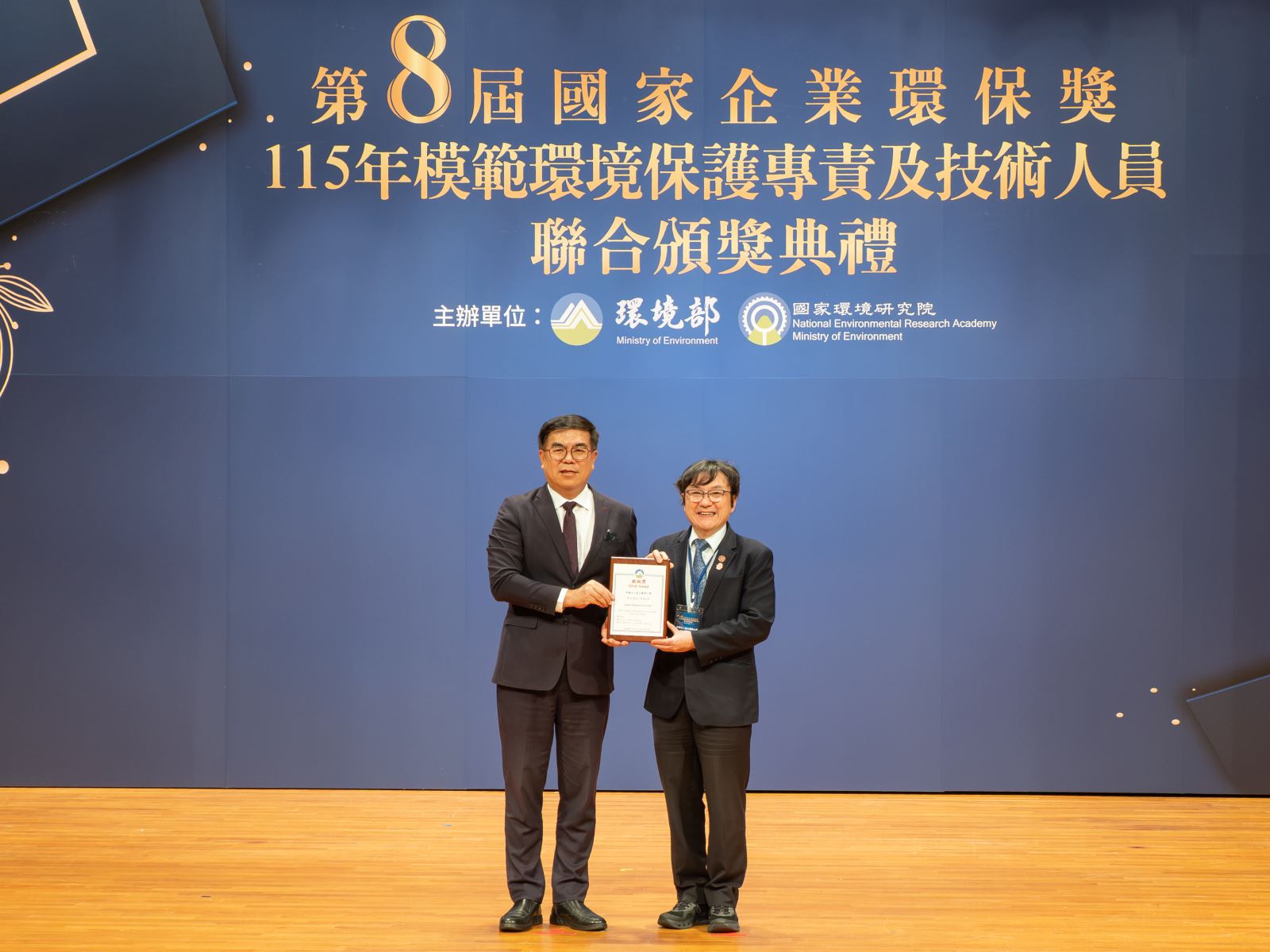
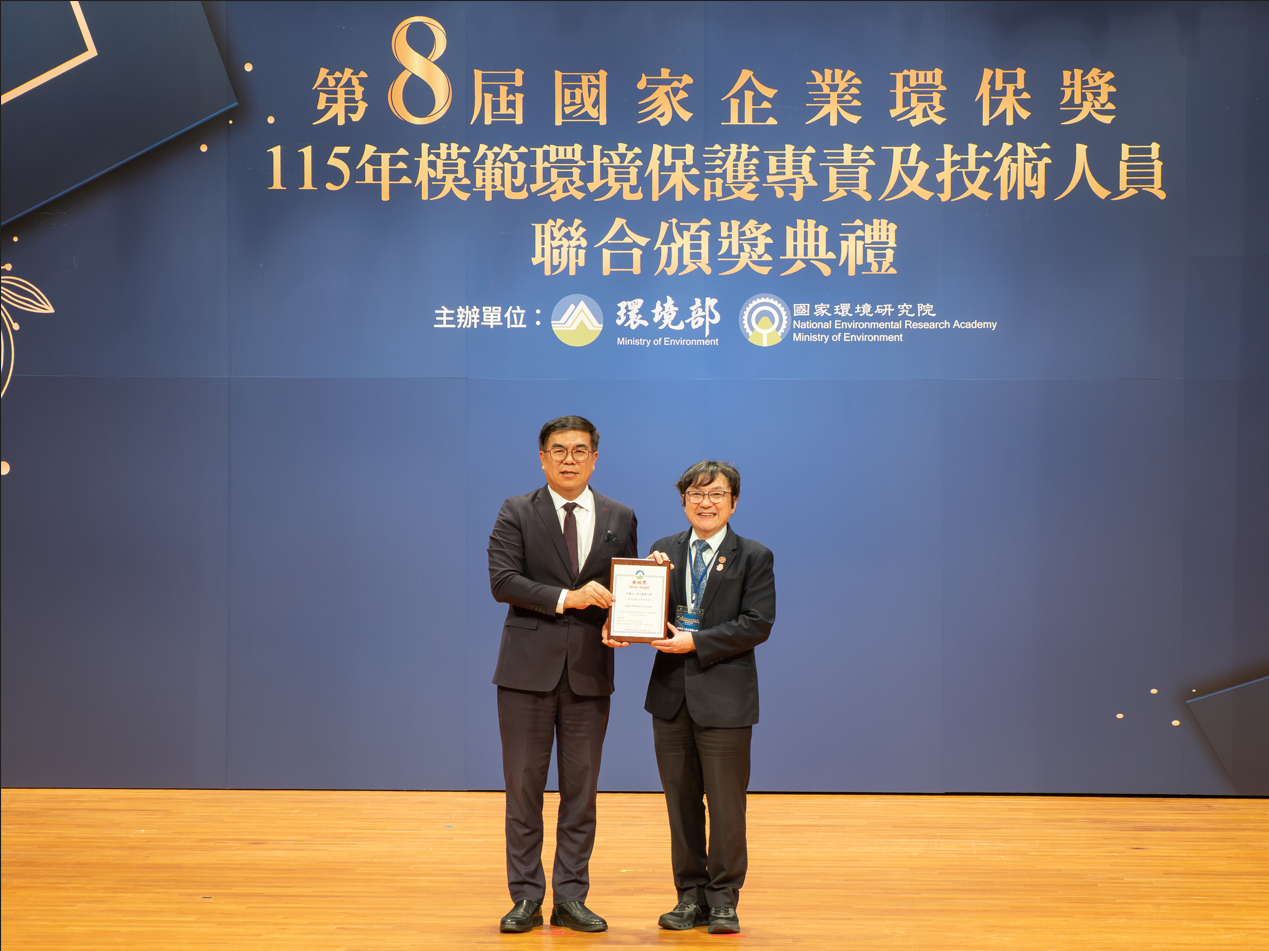
TMU President Mai-Szu Wu (right) accepts the award on behalf of the university from Minister of Environment Peng Chi-Ming (left), reflecting TMU's concrete results in campus sustainability and environmental governance.
Integrating Smart Energy Saving, Resource Circulation, and Sustainable Research to Demonstrate a Medical University's Environmental Action
Taipei Medical University (TMU) has received the Silver Award at the Ministry of Environment's 8th National Enterprise Environmental Protection Awards. On the morning of November 2, President Mai-Szu Wu was received by the President at the Presidential Office, and then attended the award ceremony on behalf of the university, where Minister of Environment Peng Chi-Ming presented the award in recognition of TMU's achievements in environmental governance and low-carbon campus development.
Built on a "One Campus" model of collaboration between the university and its hospitals, TMU links institutional governance, teaching and research, and clinical practice, turning medical expertise into concrete sustainability action — from smart energy management and medical plastic waste circulation to alternatives to animal testing.
Smart Management Delivers Energy and Carbon Savings
TMU has adopted ISO 14001 environmental management, ISO 50001 energy management, and ISO 14064-1 greenhouse gas inventories, putting environmental governance into practice through data monitoring, third-party verification, and continuous improvement. In 2025, greenhouse gas emissions fell 14.17% compared with the baseline year, while campus-wide electricity and water use decreased by 7.99% and 3.96% respectively compared with 2024.
The university has built an energy management system (EMS) that combines digital meters and anomaly alerts to improve energy efficiency, and has installed a 90 kW solar photovoltaic system and rainwater storage facilities of more than 760 tons, advancing low-carbon energy, water reuse, and climate adaptation together.
Campus-Hospital Resource Circulation Reduces the Environmental Load of Medicine and Research
All 218 laboratories on campus are covered by green management, with chemical management, waste sorting, plastic consumable recycling, and equipment energy saving reducing the environmental load of research activities at the source. TMU has also linked its three affiliated hospitals to establish a process for sorting, recycling, and remanufacturing medical plastic waste. The three hospitals reuse an average of about 8,828 kilograms of material each month, remanufacturing it into products such as sharps containers and plastic-wood chairs that return to use across the university and hospitals, forming a "sort, recycle, remanufacture, reuse" loop.
Alternatives to Animal Testing Balance Science and Ethics
On the research side, TMU applies the 3R principles of Replacement, Reduction, and Refinement to animal experiments, developing alternative methods on a high-throughput organoid platform to reduce animal use and improve animal welfare. To date, 21 high-throughput organoid lines have been established and 6 international papers published. TMU has also signed a memorandum of understanding with the University of Cambridge in the United Kingdom and is planning 10 professional courses, advancing sustainable research that balances scientific quality with research ethics through international collaboration and talent development.
Education Meets Daily Life to Put Green Dining into Practice
TMU integrates sustainability into general education, professional courses, and interdisciplinary micro-programs, using campus examples such as energy management, rainwater harvesting, and green laboratories as teaching material and guiding students to propose improvements to real-world issues.
In daily life, TMU has long promoted Meatless Days, zero-leftover food sharing, and food-saving education. Food waste is turned into compost used for campus plantings and the "Veggie Heart Garden," linking food and agriculture education to local circulation. In 2026, TMU was also certified under the Ministry of Environment's "Green Dining Table" program, and continues to promote bring-your-own-cup practices, green transportation, and resource sorting, making sustainability part of everyday campus life.
Cross-Sector Collaboration Spreads Experience Toward Carbon Neutrality
TMU actively shares its campus and hospital experience beyond the university. In 2026, it signed a memorandum of understanding with the Ministry of Environment to advance environmental education, green healthcare, greenhouse gas reduction, resource circulation, and climate and health research. It is also working with the Ministry of Health and Welfare and Ming Chuan University on the "Medical Waste Aesthetic Regeneration Action Plan," linking expertise in healthcare, materials, design, and education, and sharing its sorting processes and training experience to help more healthcare institutions advance resource circulation.
TMU stated that receiving the Silver Award at the National Enterprise Environmental Protection Awards for two consecutive years affirms its efforts to deepen environmental governance and campus-hospital collaboration. Going forward, the university will pursue its targets of a 40% carbon reduction by 2030, 70% by 2040, and carbon neutrality by 2045, continuing to advance energy, digital, and lifestyle transitions and using its education, research, and medical expertise to expand its positive impact on the environment and health.
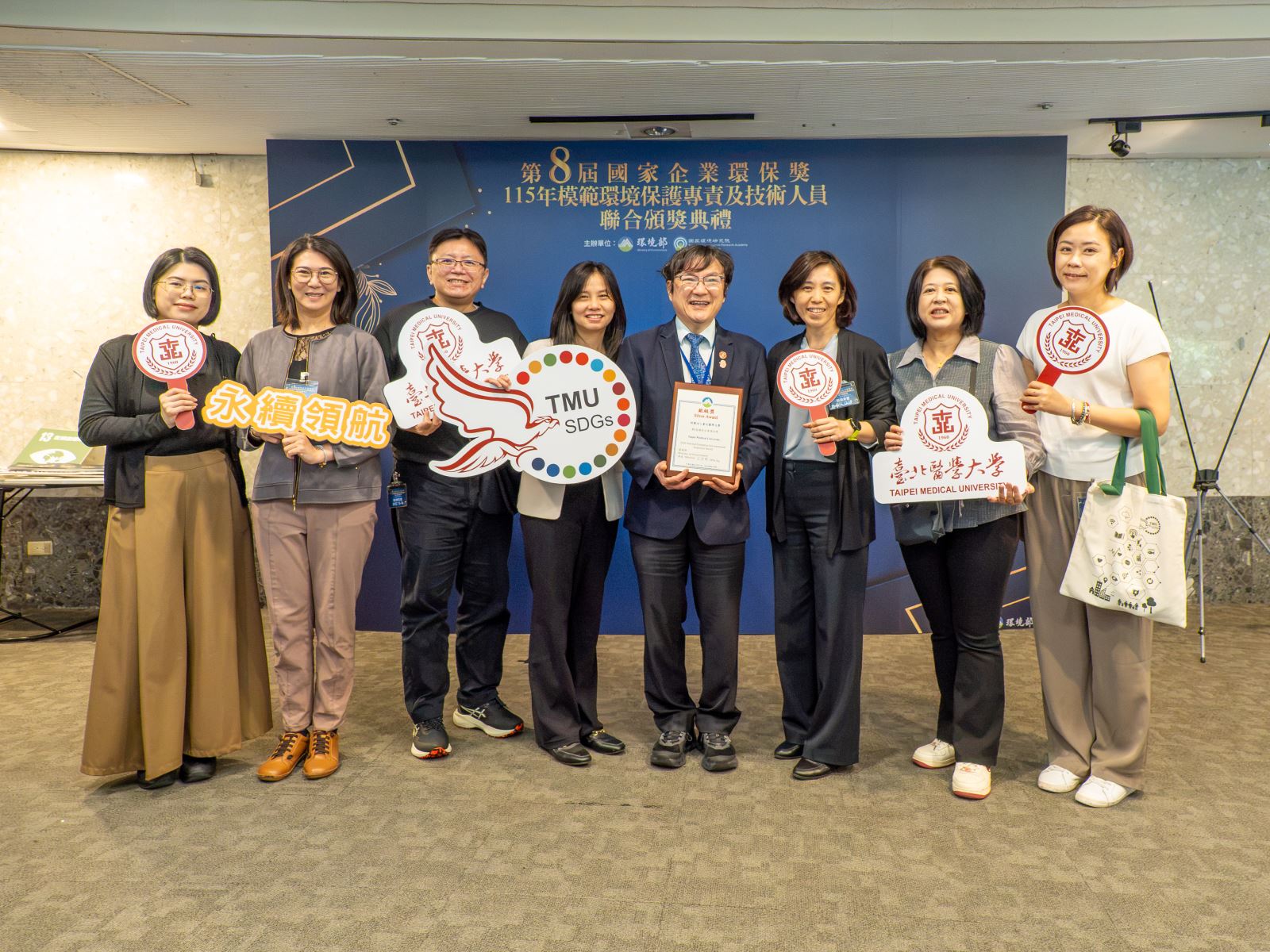
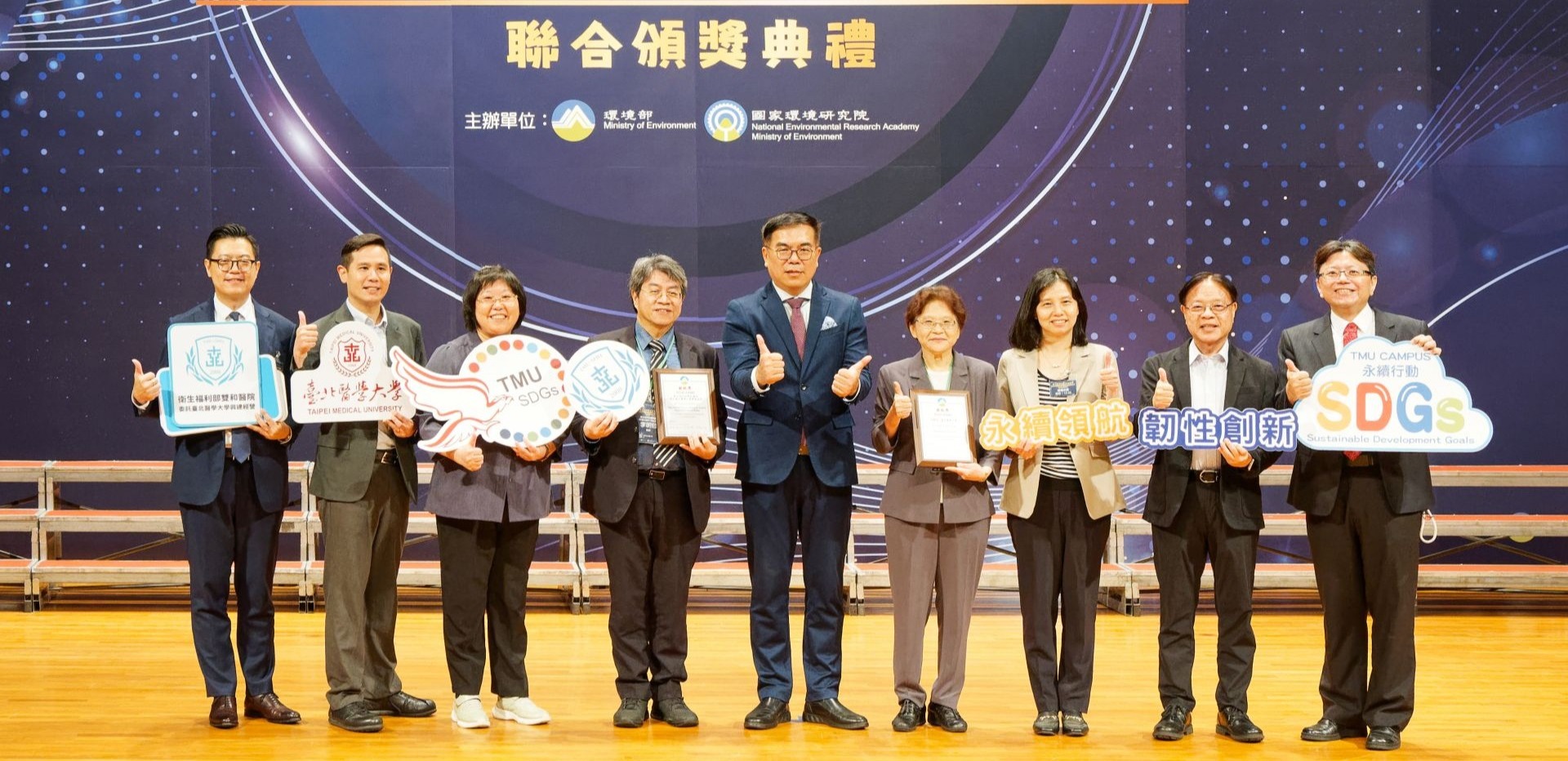
TMU President Mai-Szu Wu (4th from right) poses with the TMU team attending the award ceremony, showing the university-wide effort to advance sustainable development.