


Ministry of Environment and TMU Co-host Briefing on the National Green Canopy Climate Adaptation Program and Wood Resource Circu
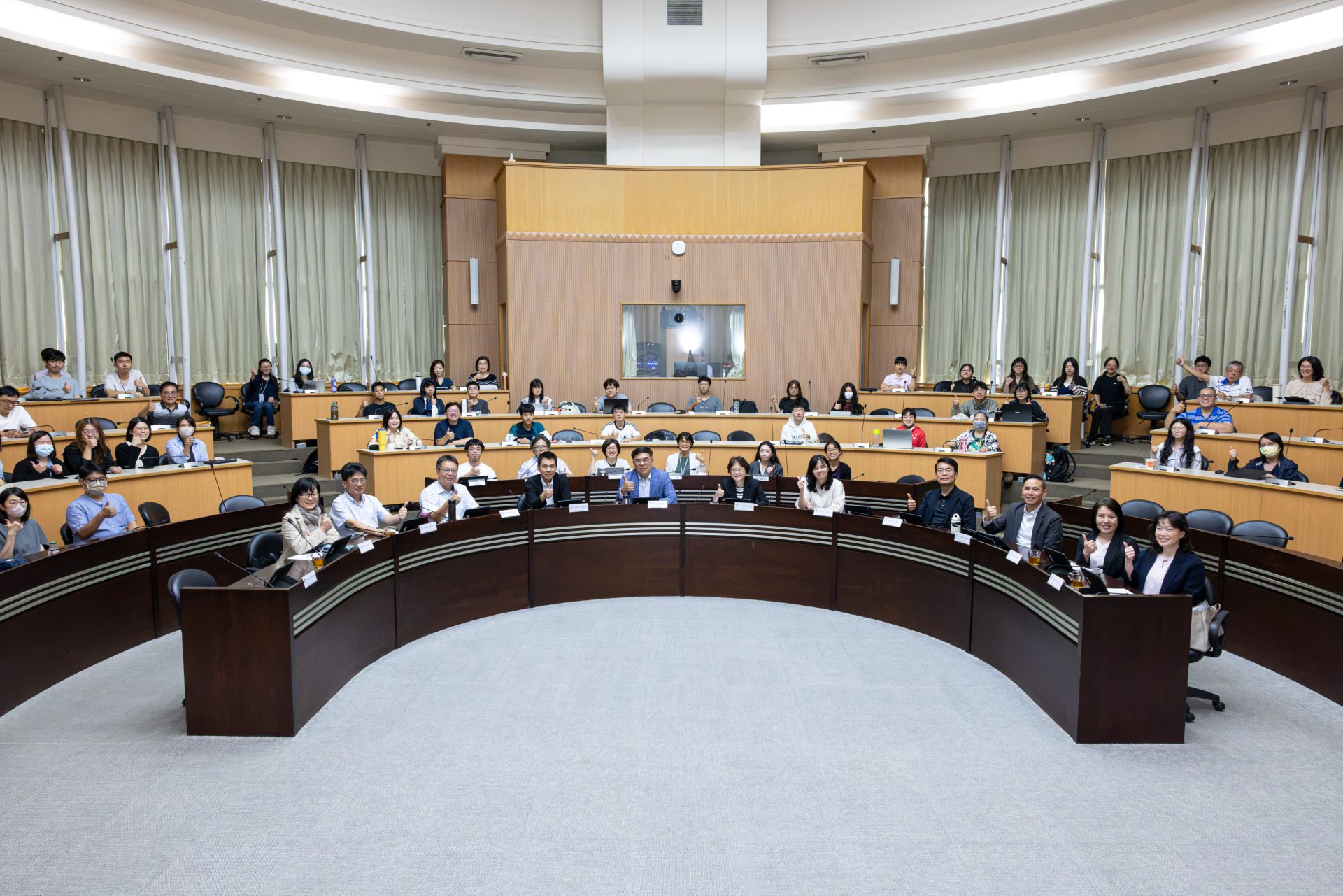
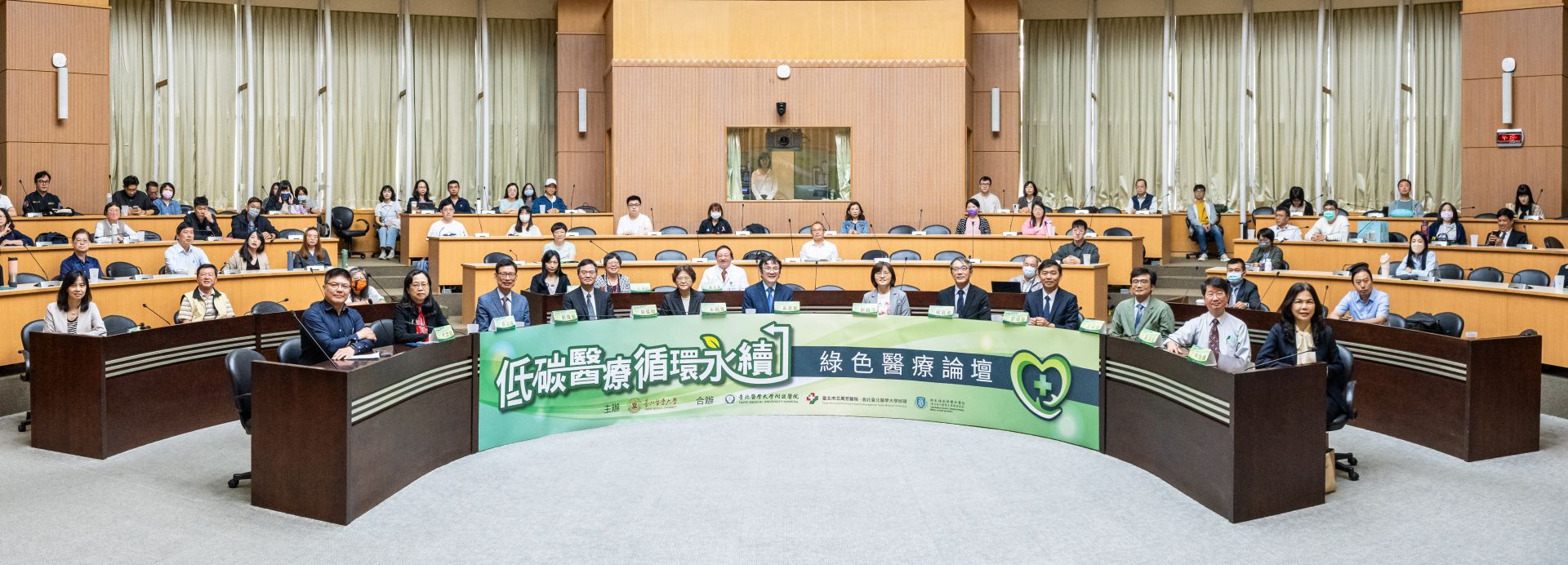
On October 7, 2026, the Ministry of Environment and Taipei Medical University (TMU) co-hosted the "Briefing on the National Green Canopy Climate Adaptation Program and the Promotion of Wood Resource Circulation" in Cheng-Pu Hall on TMU's Xinyi Campus. The event brought together representatives from government ministries, academic and research institutions, and local communities to exchange strategies for expanding urban green canopy, circulating wood resources and protecting health in a changing climate. Minister of Environment Chi-Ming Peng and TMU Vice President Chuan-Hsiu Chu delivered opening remarks, expressing the hope that cross-sector collaboration will help address the challenges that extreme weather poses to living environments and public health.
Connecting Urban Green Canopy and Advancing Wood Resource Circulation
Minister Peng centered his remarks on the theme "Let's plant trees together," stressing the importance of cross-agency cooperation and public participation. Through spatial planning, science-based management and professional tree care, he said, green canopy can become an essential part of urban infrastructure.
Ken-Mu Chang, Deputy Director-General of the Ministry's Climate Change Administration, explained that the program sets the goals of "one tree per person, one green canopy per community, and one green belt per kilometer." It links green spaces, forest belts and walking routes, using shade, evapotranspiration and rainwater infiltration to reduce the risks of extreme heat and flooding. The program will map heat hotspots, shade gaps and the distribution of vulnerable groups to identify priority sites for improvement, and will evaluate results by tree survival, the preservation of mature trees and measurable cooling benefits.
Wood resource circulation follows the principle of prioritizing material reuse over energy recovery. Depending on the characteristics of materials such as pruned branches and discarded wooden furniture, the program promotes repair and reuse, disassembly and remanufacturing, and value-added creative applications, while connecting local teams and corporate resources to extend the service life of wood materials.
Combining Health Research and Campus Practice to Strengthen Climate Adaptation
TMU Chief Sustainability Officer Ling-Chu Chien gave a presentation titled "Green Campus × Healthy, Resilient Cities: TMU's Climate Action and Sustainability Practices," sharing the university's experience in health research, campus management and talent development. TMU research shows that prenatal exposure to extreme temperatures and higher wet-bulb globe temperature (WBGT) is associated with shorter gestational age, lower birth weight and an increased risk of preterm birth, while green spaces can help mitigate the health effects of heat, underscoring the importance of green canopy in protecting vulnerable groups.
In campus environmental management, TMU has established quantitative green-campus indicators. Its 2026 inventory recorded a tree canopy coverage of 16.32% and a shade coverage rate of 73.64% along green pathways, which serve as baselines for ongoing improvement and monitoring. The university is also strengthening campus climate adaptation through rooftop greening and rainwater harvesting and reuse. In education and talent development, its green prescription courses and field-based practice integrate environmental sustainability with health promotion, equipping students to understand climate impacts and take adaptive action.
Hung-Yu Liao, President of Xinyi Community College, noted that national green canopy efforts should take an ecosystem approach that links blue and green corridors, drawing on local knowledge and civic participation to connect policy, professional expertise and residents. Through urban beekeeping, urban farming, green roofs and water-culture initiatives, the college has built the "Xinyi Green Living Learning Circle." In the future, pruned branches, wood chips and fallen trees could be used for environmental education, public art and resource circulation. Chief Sustainability Officer Chien also proposed mapping local heat hotspots, connecting cool walking routes, issuing everyday heat guidance and engaging citizen observers, integrating tree shade, drinking water and rest stops to help residents cope with heat risks and to deepen campus–community collaboration on climate adaptation, resource circulation and health resilience.
The briefing concluded with an open discussion among guests, faculty and students on building urban green canopy, tree care, wood resource circulation, and climate adaptation on campus and in the community. By combining policy briefings with practical experience, the event fostered dialogue among government, schools and community partners, building consensus for advancing green campuses and healthy, resilient cities, and helping bring climate adaptation and sustainability action into everyday life.
Related SDGs: SDG 13, SDG 3, SDG 11, SDG 12, SDG 15